Маленькая модель VibeThinker-3B
https://arxiv.org/abs/2606.16140Вышла около двух месяцев назад. Оптимизирована для решения математических задач. По словам авторов у их модели лучшие показатели по решениям математических задач среди моделей сопоставимых размеров. По некоторым тестам сопоставимы с большими моделями. Хорошие результаты по программированию.
Установил модель на домашний компьютер.
Intel Core i7-14700KF - 20 cores (8 P-cores + 12 E-cores), 28 threads.
RAM 96GB
NVIDIA GeForce RTX 3050, 6 GB VRAM
MS Windows 11
Ubuntu 26 WSL2
Завел со следующими параматерами
lama-server --model ./VibeThinker-3B-Q4_K_M.gguf --ctx-size 65536
--n-predict 49152 --parallel 1 --threads 10
--cache-type-k q8_0 --cache-type-v q8_0 --flash-attn on
--alias Viber --host 127.0.0.1 --port 18080 --jinja
Скормил задачу с международной олимпиады по математике 2023 N7 shortlist
https://www.imo-official.org/assets/doc ... 2023SL.pdfСледующий промпт
Solve the following problem.
Let a, b, c, and d be positive integers satisfying
ab/(a + b) + cd/(c + d) = ((a + b)(c + d))/(a + b + c + d).
Determine all possible values of a + b + c + d.
Give a rigorous solution.
20-25 t/s на пике. Но в итоге 38,008 tokens 1h 14min 8.56 t/s . 1ч 15 мин на задачу.
Ответ в целом правильный но в решении есть ошибка . В каком месте?
Помещаю то что выдала модель.
Let

Since the equation

is homogeneous of degree

, we may multiply all four numbers by the same positive integer without destroying a solution. Hence we first look for
primitive solutions (those for which

) and then obtain all other solutions by scaling.
1. A necessary arithmetical condition for the sumPut

Then

Multiplying (1) by

gives

Thus
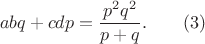
Consequently,

Write

Then

, and the divisibility condition becomes

Because

(any common divisor of

and

would divide both

and

, contradicting

), we must have

Set

Then from (3) we obtain

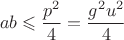
Since
and similarly
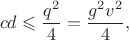
the left-hand side of (5) never exceeds the right-hand side; equality in (5) forces the two AM--GM inequalities to be equalities. Hence
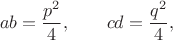
which is possible only when

and

are even. Consequently,

is even and

is even, so

More importantly, from (4) we see that

Thus
the sum  must be a product of two positive integers and
  with
with  .
.If we write

and put

, condition (6) becomes
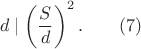 2. Characterisation of the integers satisfying (7)
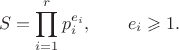
Let the prime factorisation of
be
Write a divisor
of
as
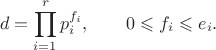
Condition (7) is equivalent to

i.e.

If
every exponent

(so that
is
square-free), then

and (8) forces

for every

; the only divisor satisfying (7) would be

, which is forbidden because
. Hence
no square-free integer can occur as a sum.
Conversely, if
is
not square-free, some prime, say
, occurs with exponent

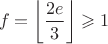
. Take
and set

(and use exponent

at every other prime). Then
and (8) holds, so (7) is satisfied. Thus
every non-square-free integer admits a divisor satisfying (7).
Therefore, the sum

can be any integer at least

that is not square-free.
3. Explicit construction for every admissible sumLet
be a non-square-free integer, and let

be any integer such that

Write

A concrete primitive solution for the square

is obtained by choosing

A short computation shows that this quadruple satisfies (1) and that

Because the equation is homogeneous of degree
, multiplying this solution by the factor

yields

which consists of positive integers and satisfies (1). Its sum is

Thus, for every integer
that possesses a squared prime divisor, we have exhibited an explicit quadruple

solving the problem.
4. ConclusionThe necessary condition derived from the divisibility argument coincides with the sufficient construction above. Hence the set of all possible values of

is precisely

i.e. all integers at least
that are
not square-free (equivalently, those having at least one prime divisor with exponent at least

).
This includes all multiples of
, all perfect squares, and any integer that contains a squared prime factor. No square-free integer (for example,

) can occur.
-- добавлено через 12 минут --Причем ошибка довольно элементарная. Странно выглядит на фоне достаточно гладкого и подробного решения.




















![$L[u]=u''+\pi^2 u$](https://dxdy.ru/math/110ef6b8c0a7364581d894608f4f21fb82.png "$L[u]=u''+\pi^2 u$")


